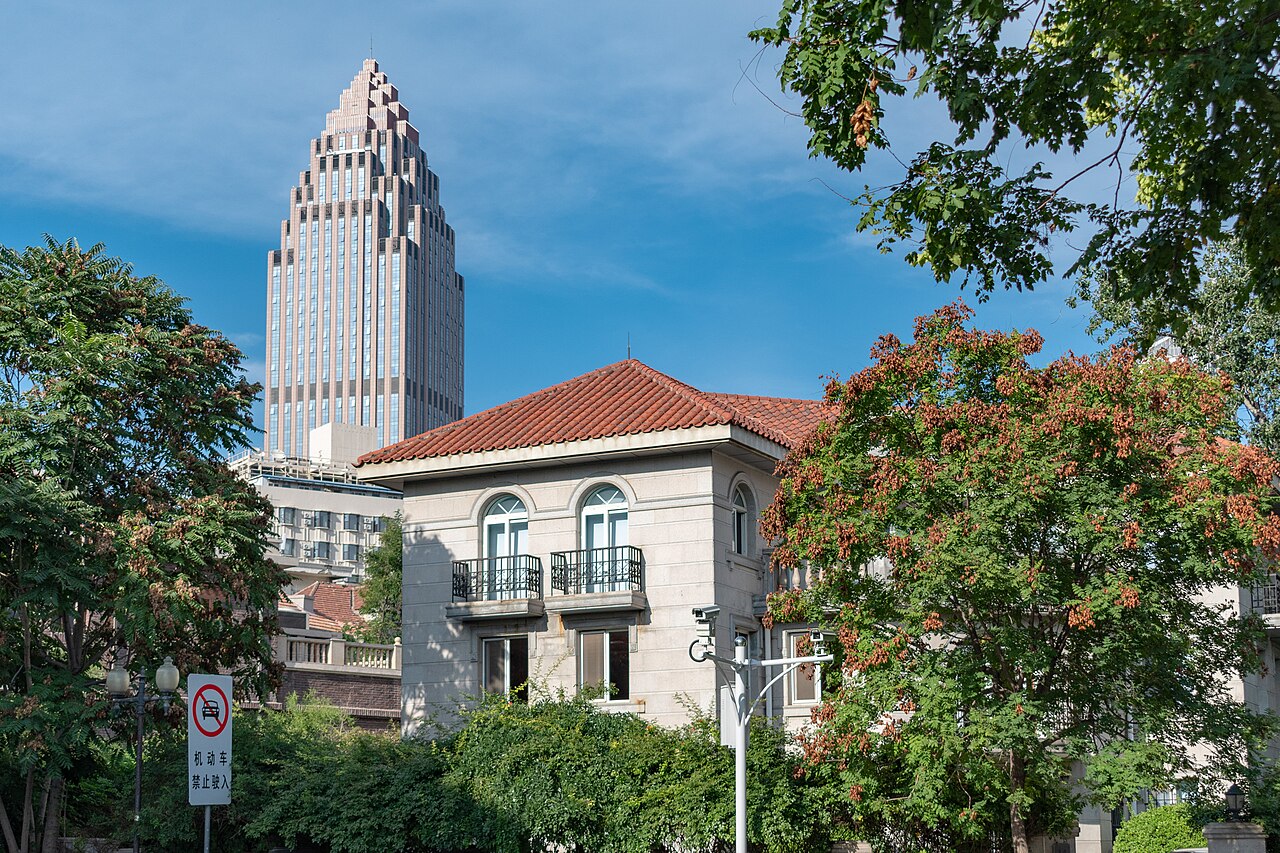
Tianjin: Beijing's neighbour with a European riverfront
Half an hour from Beijing by rail, Tianjin pairs 1920s concession architecture on the Haihe with crosstalk comedy and its own breakfast culture.
The short answer
Tianjin is worth one night, or a long day from Beijing, and the reason is the architecture: nine foreign concessions left banks, churches and villas from eight nations along the Haihe. The C train from Beijing South takes 30 minutes for ¥55 in second class. Come for the Wudadao streets, a crosstalk show and breakfast.
- Tianjin is 30 minutes from Beijing South by rail — ¥55 in second class.
- The Wudadao hold around 2,000 European-style villas on five parallel streets.
- Crosstalk (xiangsheng) plays nightly at the Mingliu Teahouse, about ¥40.
- Breakfast is the local speciality: jianbing, guobacai and mahua, not the dumplings.
- Aim for April–May or September–October; the Binhai coast is windy year round.
A port the treaties built
After the Second Opium War, Tianjin was forced open as a treaty port, and nine foreign powers carved out concessions along the Haihe. The result is a centre that looks unexpectedly European: a Gothic cathedral, a French municipal hall, Italianate squares and a whole street of 1920s banks, built between the 1860s and the 1940s.
The Wudadao and the river
The densest group is the Wudadao, or Five Great Avenues, south of the centre: five parallel streets lined with about 2,000 villas in British, German, Spanish and Italian styles. Walk it early, then follow the Haihe down to the Italian Style Town and the Tianjin Eye, a 120 m (394 ft) wheel on the Yongle Bridge.
Crosstalk, and what to eat
Tianjin is the home of crosstalk (xiangsheng), a two-man comic dialogue in fast local dialect; shows run nightly for about ¥40. The food to seek out is breakfast, not the branded dumplings: jianbing pancakes folded with egg and crisp crackers, guobacai soup and fried dough twists, all under ¥20.
Wudadao (Five Great Avenues)
Around 2,000 European-style villas on five parallel streets. Free to walk; start at the Horse and Carriage statue on Machang Dao.
Jiefang North Road
Tianjin's old Wall Street, lined with 1920s neoclassical and Art Deco banks. Best walked south from the Jiefang Bridge.
Mingliu Teahouse crosstalk
Two performers, one table and rapid Tianjin dialect. Tickets are about ¥40; arrive early for a front seat.
Tianjin Eye
A 120 m (394 ft) ferris wheel built on the Yongle Bridge over the Haihe; best after dark.
Tianjin breakfast
Jianbing, guobacai and mahua rather than the franchise dumpling houses. Stalls around the old town open from 06:30.
Practical
| Airport code | TSN (Binhai) |
|---|---|
| Direct flights from the UK | None non-stop; connect via Beijing (30 min by rail) or Shanghai |
| High-speed rail | 30 min from Beijing; about 2h to Jinan |
| Days needed | 1 night |
| Best months | April–May and September–October |
| Visa note | UK passports: visa-free up to 30 days to 31 Dec 2026 |
| Population | 13.6 million (Tianjin Municipality) |
| Metro | Lines 1, 2, 3, 5, 6, 9; fares ¥2–7 |
| Concessions | Nine historic foreign districts along the Haihe |
Getting there from the UK
Tianjin Binhai (TSN) handles domestic and some international flights, and Metro Line 2 links it to the centre. From Beijing South, C trains run every 10–20 minutes and take 30 to 33 minutes for ¥55 in second class.
Inside the city, Metro Lines 1, 2, 3, 5, 6 and 9 cover the sights, with Line 9 continuing to Binhai on the coast. Fares are ¥2–7 and taxis start at ¥11.
How many days
One night is enough, and a long day trip from Beijing works. Mornings suit Wudadao and Jiefang North Road, afternoons the Haihe and the old culture street, and evenings a crosstalk show. A second day adds the Binhai coast or the Huangyaguan Great Wall to the north.
Worth knowing if you're travelling from the UK
Tianjin is the easiest add-on to a Beijing itinerary: the train costs less than a London tube fare and takes half an hour. The concession architecture speaks directly to British travellers — this is where the treaty ports met European banking. English is less common here than in Beijing, so a guide helps with the crosstalk and the breakfast stalls.