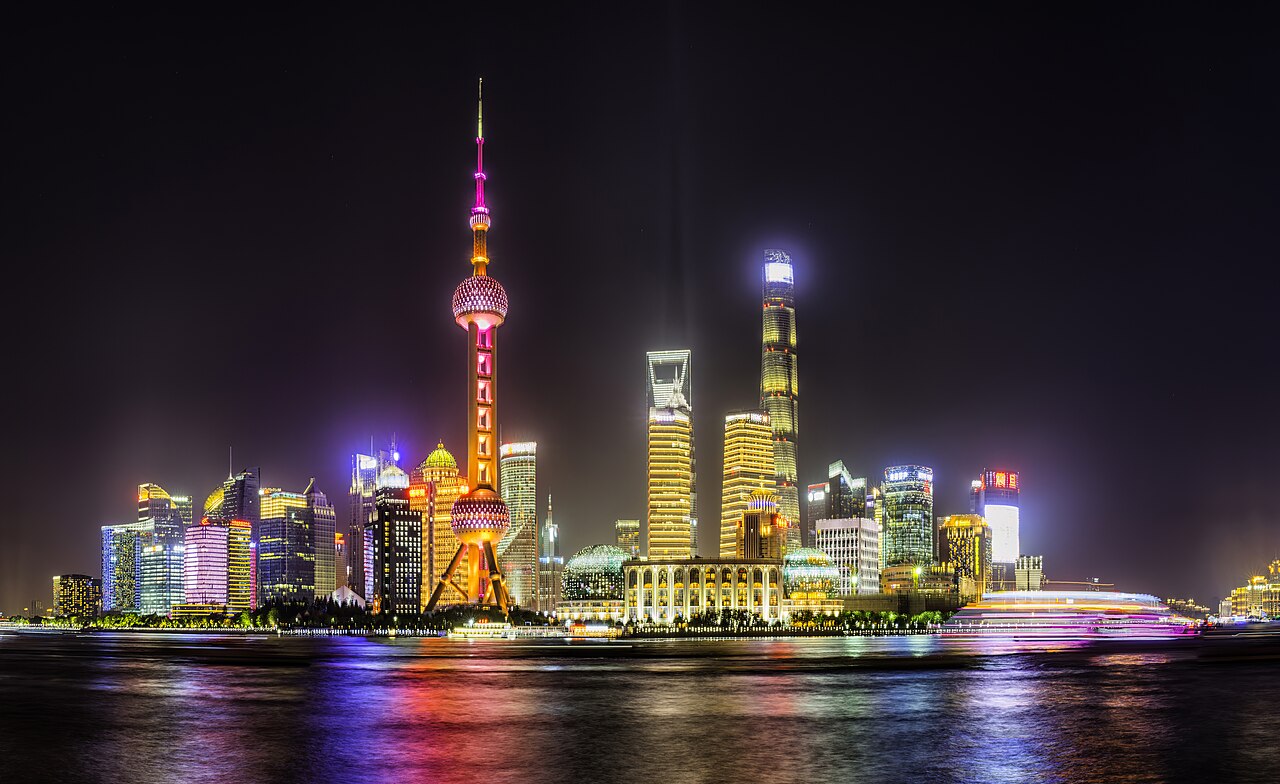
Shanghai: colonial riverfront, glass towers and canal towns
Two days on the Huangpu and a third for a canal town: Shanghai is the easiest first city in China for British visitors.
The short answer
Give Shanghai two full days, or three if you want a water town. The Bund is best at dusk, when the 1920s banks light up opposite the Pudong towers. Metro Line 2 links the airports, the Bund and Lujiazui, and most fares stay under ¥7 (about 75p).
- Two days cover the Bund, Yu Garden, the French Concession and a museum.
- Pudong (PVG) takes long-haul flights; Hongqiao (SHA) is domestic and the rail hub.
- The maglev from Pudong runs at up to 300 km/h (186 mph) and takes 8 minutes.
- High-speed rail: 25 min to Suzhou, 45–60 min to Hangzhou, 4h 30m to Beijing.
- Shanghai is the most English-friendly city in China and the easiest for cards.
A port city that kept rebuilding
Shanghai was a fishing town, then a treaty port, then a megacity of 24.9 million, and it never cleared away the older layers. A Buddhist temple sits inside a shopping mall, a 1930s banker's mansion is now a hotel, and a noodle shop opens next to a Michelin kitchen. It rewards walking more than coach tours.
The river is the plan
Almost everything worth seeing lies within a few kilometres of the Huangpu. The Bund's remaining 52 buildings run 1.5 km (0.9 mi) along the west bank; Lujiazui's towers rise opposite. Metro Line 2 stitches the two banks together and carries on to Pudong airport.
When to come
Pick spring or autumn. March to May and September to November sit between 15°C and 25°C (59–77°F). July and August are humid and above 33°C (91°F), June brings the plum rain, and winter is mild but damp, rarely dropping below freezing.
The Bund
1.5 km of 1920s banks and trading houses facing the Pudong skyline. Come at dusk for the lights, then again after 20:00 when the crowds thin.
Yu Garden and the old town
A Ming scholar's garden of rockeries and koi ponds, ringed by teahouses. The peak ticket is ¥40; go at 09:00 sharp.
The former French Concession
Plane-tree streets and Art Deco lanes around Wukang Road, best on foot. Metro Line 10 stops at Shanghai Library.
Shanghai Museum
Bronzes, ceramics and calligraphy in a clear chronological layout. Entry is free but needs a timed booking online.
Zhujiajiao water town
Canals, stone bridges and boats, about an hour out on Metro Line 17. Arrive by 09:00 to beat the coaches.
Practical
| Airport codes | PVG (Pudong) and SHA (Hongqiao) |
|---|---|
| Direct flights from the UK | Daily non-stop from Heathrow, about 12 hours |
| High-speed rail | 25 min to Suzhou; 45–60 min to Hangzhou; 4h 30m to Beijing |
| Days needed | 2–3 days |
| Best months | March–May and September–November |
| Visa note | UK passports: visa-free up to 30 days to 31 Dec 2026 |
| Population | 24.9 million (Shanghai Municipality) |
| Metro | 20 lines; most fares ¥3–7 |
| Maglev | Pudong to Longyang Road in 8 min, up to 300 km/h |
Getting there from the UK
Pudong International (PVG) takes the long-haul flights; the maglev covers the 30 km to Longyang Road in 8 minutes at up to 300 km/h, or Metro Line 2 takes about an hour for ¥8. Hongqiao (SHA) is domestic and sits beside the main railway station.
From Hongqiao, high-speed trains reach Suzhou in 25 minutes and Hangzhou in under an hour. Twenty metro lines cover the city; most fares are ¥3–7 and taxis start at ¥16.
How many days
Two full days for the city: the Bund, Yu Garden, the French Concession and one museum. A third day is for a water town, and Zhujiajiao on Metro Line 17 is closest. If Shanghai is your entry point, a fourth day adds Nanjing Road and a rooftop dinner over Lujiazui.
Worth knowing if you're travelling from the UK
Heathrow to Pudong runs daily and takes about 12 hours eastbound; Shanghai is eight hours ahead, so the arrival day is a write-off. It makes a gentler landing than Beijing or Xi'an because English signage and card acceptance are the best in China. Keep ¥200–300 in cash for street stalls.